
A people, a palace, a promise.
A brief history of Nkwen — cradled in the Grassfields highlands of Bamenda, carried across the world by sons and daughters who never forget where home begins.
Beginnings · Mbebelie
Two brothers, one village split in two
Nkwen is a Grassfields Bantu Fondom cradled in the highlands of Bamenda, in the Northwest Region of the Republic of Cameroon. Our story begins in a place called Mbebelie, where two brothers — Suh-Fuh and Neba-Fuh — quarreled over command of their people. The village split like a pear cut in two. Suh-Fuh's followers settled at Atielah, and there the seed of Nkwen was planted.
The founding · Mia Awakezang
The woman who led her people home
Then, one bright day, a gentle woman named Mia Awakezang, guided by what the elders called "invisible heavenly guidance," wandered from the mountain village and crossed into a vast, fertile flatland — rich in crops, fruits, bushes, and trees enough to build a thousand homes. She returned to the palace with news of this discovery, and the entire village trooped to the virgin site that would become Nkwen as we know it.
Kwifor, our supreme governing council, ordered her honored with a great ceremony. She was crowned Ndela-mbieh — village founder — and remembered forever as the woman who led her people home. She rests today without an heir, yet every clean stream and fertile farm in Nkwen is part of her gift.
The Palace · The six quarters
From Atielah to Membuh
The Palace, the beating heart of the Fondom, first sat at Atielah in Mbelewa, then moved to Fejah, and finally — around 1934, during the reign of Fon Azehfor II — was established at Membuh, where it stands today.
Our six quarters — Membuh, Mbelewa, Mbesi, Menteh, Manda, and Bayelle — each carry their own dances, family houses, and traditions. Njang belongs to Mbelewa, Amoug to Mbesi, Mandere to Mbeso, Teken to Manda. Each rhythm tells a different part of the same long story.
Each rhythm tells a different part of the same long story.
The Stool · Kwifor · Tekembeng
Three institutions, twenty-four Fons
Through the generations, Nkwen has been shaped by its three immutable royal institutions — the Stool, the Kwifor, and the Tekembeng — and by the Fons who have carried our people forward.
The late His Royal Highness Fon S.Z. Ngufor III led the Fondom into the modern era, launching the Nkwen Water Project in 1989 and welcoming the rise of schools across every quarter. Today, His Royal Majesty Fon S.F. Azehfor III sits on the Stool as the 24th Fon of Nkwen, guiding the Fondom into a new century with a vision rooted in tradition and oriented squarely toward the future.
Nkwen today
40,000 strong — and a diaspora that spans the world
Nkwen is home to more than 40,000 people, most still living in rural communities across Bamenda III Subdivision, with a vibrant and growing diaspora across Europe, Africa, and the Americas. We speak Mehnkwen — a tonal Grassfields Bantu language preserved and codified through the tireless work of the Nkwen Language Committee.
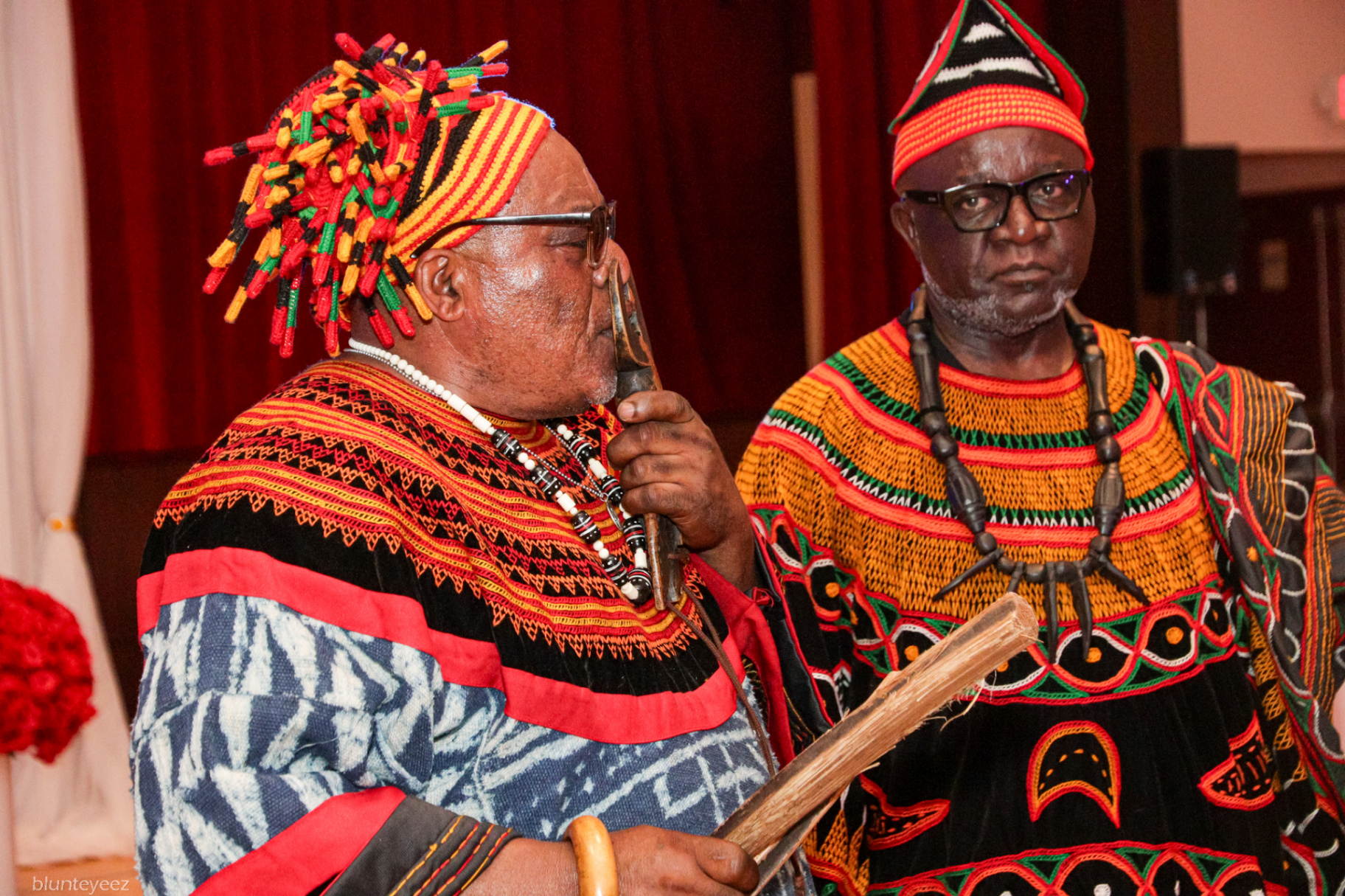
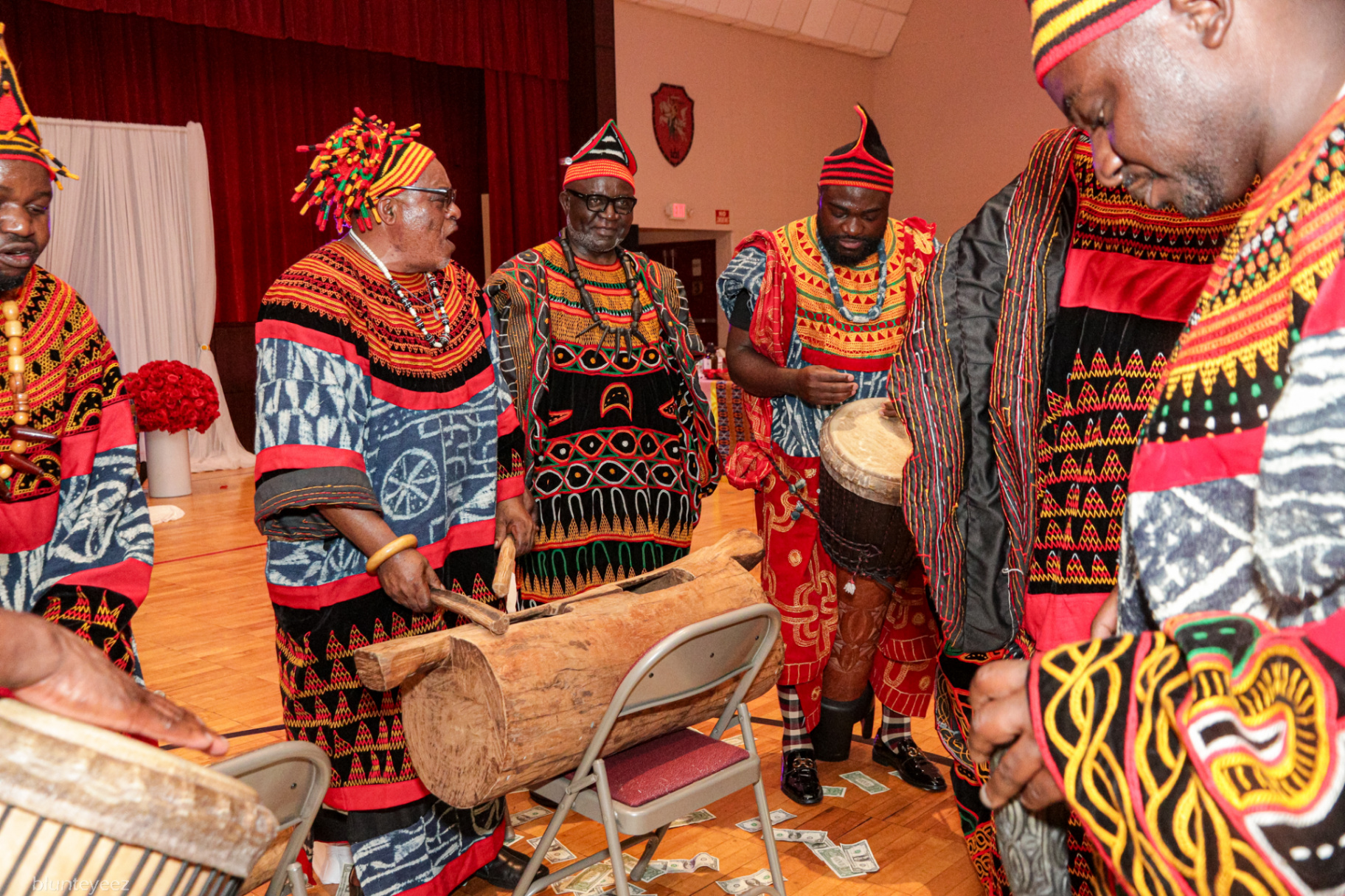
We dance to talking drums and wooden gongs. We wear toghu and ndop with pride. We celebrate the Cultural Jamboree in royal regalia and gather every year as one people. And wherever we are — Bamenda or Boston, Bonn or Beverly Hills — we remain Mehnkwen, sons and daughters of one Fondom.
Bamenda or Boston, Bonn or Beverly Hills — we remain Mehnkwen, sons and daughters of one Fondom.
Carry the story forward.
Join NCDA-USA — the diaspora home of every Nkwen son and daughter in America.